The paperwork is not the romantic part of your wedding, but understanding it early is what lets you skip past it and get to the part that is.

Getting legally married in Mexico is possible in Tulum, and for most couples it means choosing between a Mexican civil ceremony performed by a local judge, which is legally recognized, or a symbolic ceremony here paired with a legal marriage handled quietly at home. Both paths lead to a wedding day that looks and feels the same. The difference is entirely in the paperwork, and that paperwork has real deadlines. SOLAYA is a destination wedding photography, cinematic filmmaking, and planning studio based in Tulum, Mexico, and this is the guide we wish existed when we were the ones filling out the forms.
The question every couple asks eventually
It usually comes a few weeks into planning, somewhere between choosing a venue and picking a font for the invitations. Someone, often a parent, asks: "Wait, is this actually going to be legal?" It is a fair question, and it deserves a real answer, not a vague reassurance from a resort coordinator who has said it a thousand times without ever explaining it.
We asked it ourselves. Before we ever moved to Tulum, before SOLAYA existed, we drove to a courthouse in Seattle and got legally married in a fifteen-minute appointment with no guests and no vows written yet. Our real wedding, the one with the palapa and the ocean and everyone we love in one place, happened months later in Tulum in March of 2025. To every person standing there, it was our wedding day. On paper, it had already happened weeks earlier, quietly, in a government building none of them ever saw.
We chose that route on purpose, and we would choose it again. It meant our Tulum days were entirely ours: no registry appointments, no translated documents, no arriving early to sit in an office instead of at the venue. By the time we stood on the sand, the legal part was done, and nothing about the day was waiting on paperwork.
Mexico does not have one marriage law. It has thirty-two.
This is the detail most couples miss, and it explains almost every confusing thing you will read online. Mexico's marriage requirements are set state by state, not nationally. What a friend did in Cabo has little bearing on what you will do in Tulum, because Cabo is in Baja California Sur and Tulum is in Quintana Roo. Even advice from a Cancun wedding two years ago may already be outdated, because Quintana Roo's civil registry has changed its own rules more than once in the past year alone.
As of mid 2026, Quintana Roo removed its longstanding requirement for a prenuptial blood test and medical certificate, a step that used to send couples scrambling for a Mexican clinic appointment days before their wedding. In its place, the state now requires proof that neither partner has outstanding child support obligations in Mexico, a certificate the civil registry issues after checking its own records. That certificate takes time. Registries recommend starting the process at least four weeks before your wedding date, which means this is not a task for wedding week. It belongs on your planning timeline the moment you set a date.
What a legal ceremony in Quintana Roo actually requires
A civil marriage in Tulum is officiated by a local judge or registrar, conducted in Spanish, and legally recognized both in Mexico and, once properly documented, in the United States. The core documents a foreign couple should expect to gather:
- Valid passports for both partners, with at least six months of validity remaining past the wedding date
- Birth certificates, apostilled in your home country and translated into Spanish by an authorized local translator
- The child support obligation certificate issued by the Quintana Roo civil registry
- Two to four adult witnesses with valid identification, present at the ceremony. Requirements vary by municipality, so confirm the exact count with your registrar or planner well in advance
- If either partner was previously divorced or widowed, additional documentation of that status. Quintana Roo also holds a 300-day remarriage restriction for women whose previous marriage recently ended, which is unusual even by Mexican standards and worth flagging early if it applies to you
Most couples are asked to arrive three to five business days before the ceremony to finalize paperwork in person. This is not a formality to skip. Civil registry offices in Quintana Roo do not process documents remotely, and Mexican bureaucratic timelines rarely move faster than they need to.
The symbolic route, and why so many couples choose it
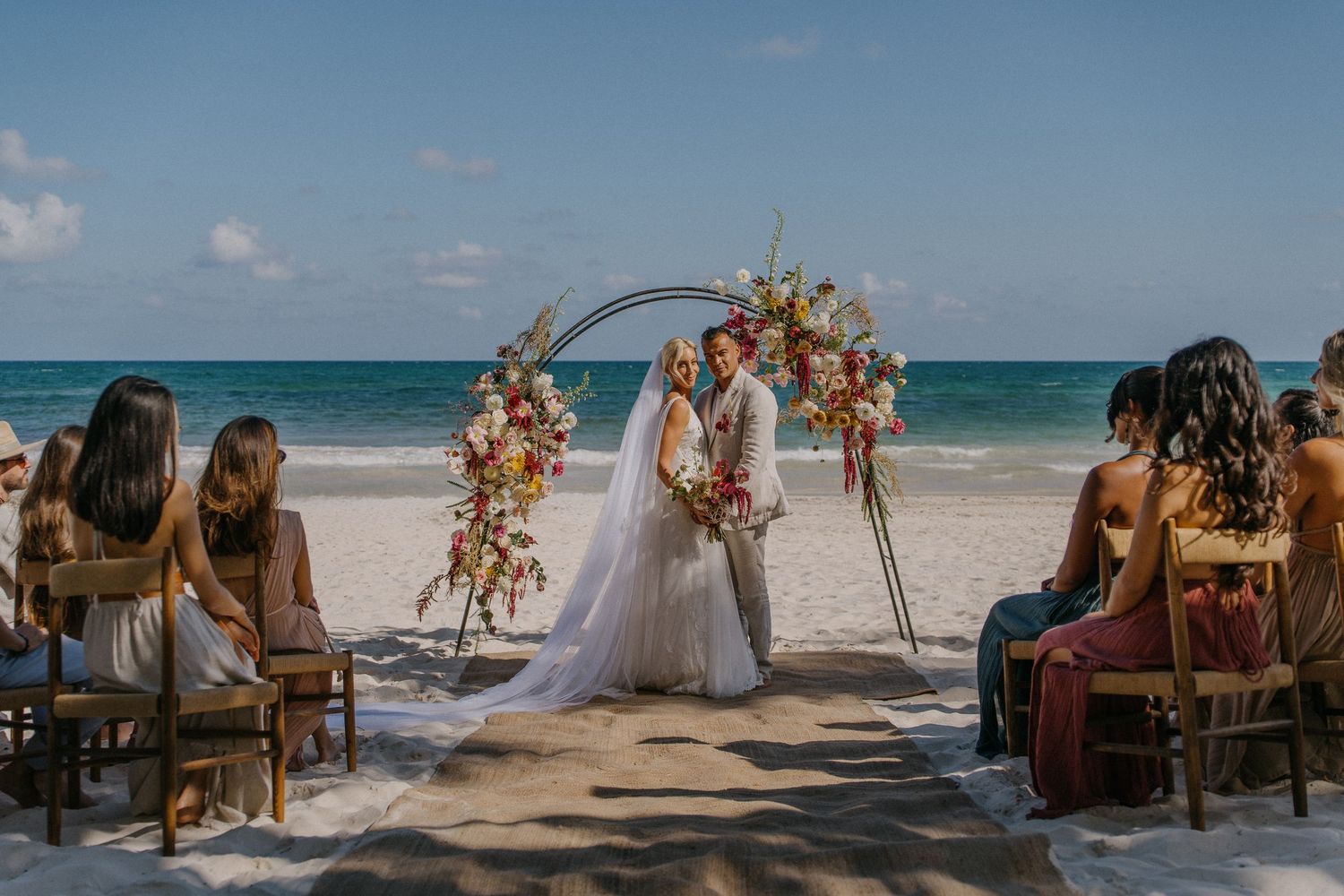
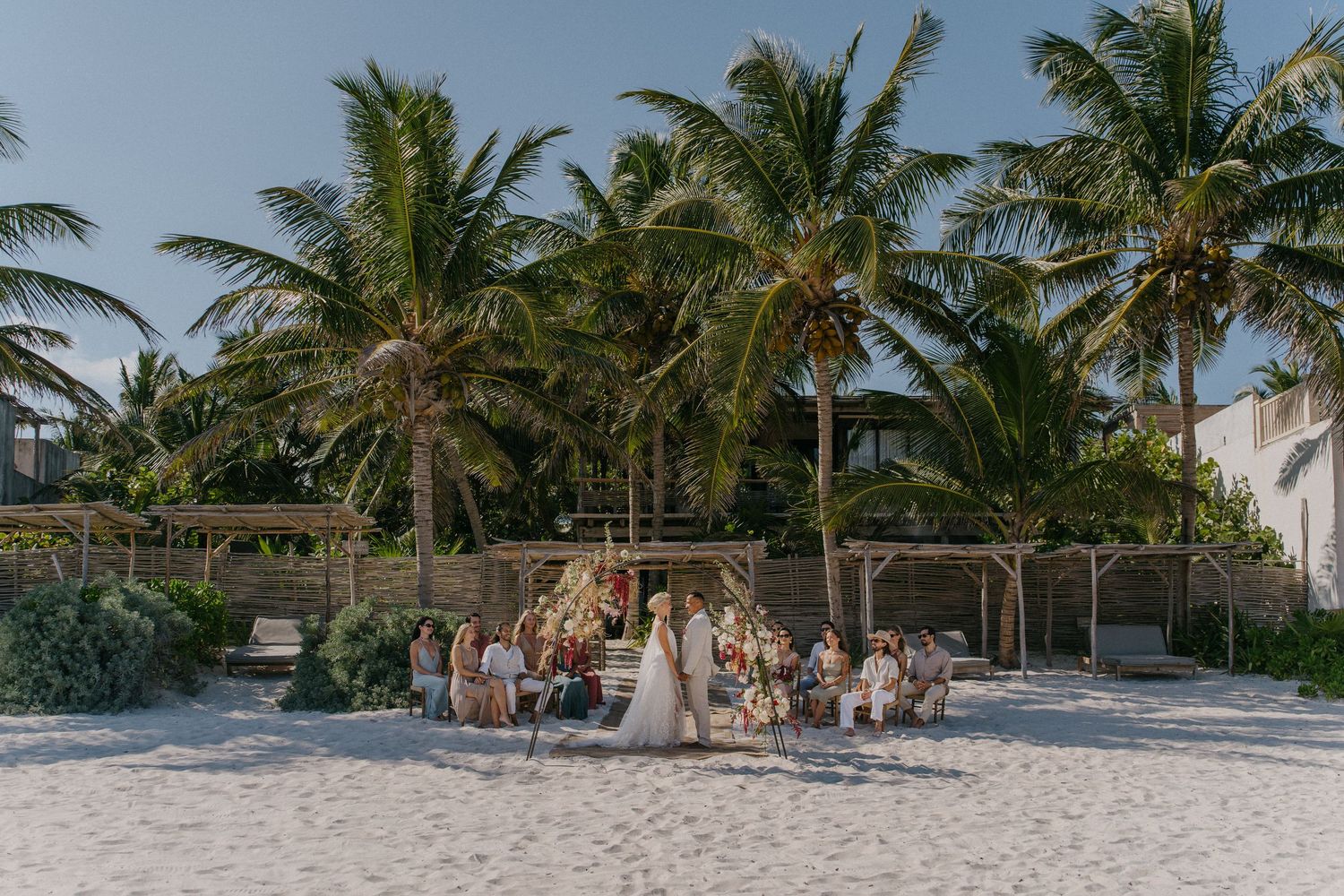
Here is what surprises most people: the majority of destination weddings in Mexico, including a large share of the ones we document in Tulum, are symbolic rather than legally binding on-site. The couple marries legally at home, often at a courthouse or with close family in a brief private ceremony, then holds their full wedding in Tulum with a non-denominational officiant leading the vows. To every guest, it is indistinguishable from a legal ceremony. The vows are the same. The emotion is the same. The only difference is which government recognizes the certificate.
Couples choose this path for practical reasons. It removes the translation costs, the apostille process, the child support certificate, and the arrival-days-early requirement. It also protects against the small but real risk of a document error derailing the legal status of a wedding day that took a year to plan. For couples with complicated document histories, prior marriages, or a tight guest travel window, symbolic is often the calmer choice.
Neither option is more meaningful than the other. We have documented deeply legal civil ceremonies at sunset, and we lived the symbolic version ourselves, married quietly at a Seattle courthouse weeks before we ever stood under a palapa in Tulum. The difference was never in the room. It was only ever on paper.
What this means for how you plan
Decide early which path you are taking, because it changes your timeline. A legal Quintana Roo ceremony means starting the child support certificate process a month out, budgeting for certified translation, and building in arrival days that some couples would rather spend at their venue instead of a registry office. A symbolic ceremony means your Tulum days are freed up entirely for the wedding itself, with the legal step handled quietly at home on your own schedule.
Either way, loop in your planner the moment you have a date. Vayle handles this conversation with nearly every SOLAYA couple in the first planning call, because it shapes everything from your arrival day to your rehearsal schedule to how much breathing room you have before the ceremony itself. It is the same conversation we had with each other before we ever booked a single Tulum vendor detail, and it is the reason our own wedding week had nothing on the schedule but the wedding.
Frequently Asked Questions (FAQ)
Can I get legally married in Tulum as a US citizen?
Yes. A civil ceremony performed by a Quintana Roo judge is legally recognized in both Mexico and the United States once the marriage certificate is properly apostilled. You will need apostilled and translated documents, and the process should begin at least a month before your wedding date.
Do I still need a blood test to marry in Tulum?
No. As of mid 2026, Quintana Roo removed the prenuptial medical certificate and blood test requirement that used to apply. Rules in this area change relatively often, so confirm current requirements with your registrar or planner as your date approaches.
What is the difference between a legal and symbolic wedding ceremony in Mexico?
A legal ceremony is officiated by a Mexican civil judge and recognized by both governments. A symbolic ceremony looks identical to guests but is not legally binding, with the couple typically marrying legally at home separately. Most destination weddings in Mexico, including many in Tulum, are symbolic.
How many witnesses do I need for a legal wedding in Tulum?
Quintana Roo generally asks for two to four adult witnesses with valid identification present at the ceremony, though the exact number can vary by municipality. Confirm the current requirement with your civil registrar or planner well before your wedding date.
How far in advance should we start the legal marriage paperwork?
Start as soon as you set a date, and no later than four to six weeks out. The child support obligation certificate alone can take several weeks to process, and document translation and apostille work adds additional time couples often underestimate.
The paperwork is not the romantic part of your wedding, but understanding it early is what lets you skip past it and get to the part that is: the moment you actually say the words, whether a judge is standing beside you or not.
Let Us Help You Plan
Planning a Tulum wedding and not sure which path is right for you? Reach out to SOLAYA to talk through your date, your paperwork timeline, and how Vayle can help you decide between a legal and symbolic ceremony before you book a single vendor detail.